Tattoo Cartridges: How to Choose the Right Needles for Different Techniques
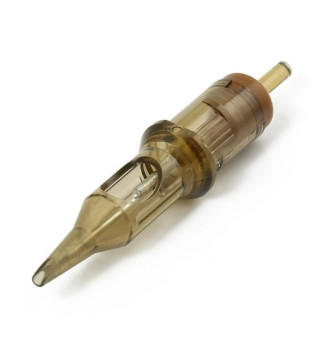
The quality of a tattoo depends not only on the artist's skill but also on the correct selection of consumables. When delving into the topic, it's helpful to understand what tattoo cartridges are and why choosing a specific model affects the result—from outline clarity to ink density. Below, we'll cover everything you need to know about tattoo cartridges: the different types and how to choose the right one for your technique.
Types of Tattoo Cartridges
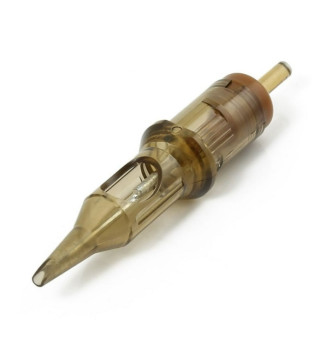
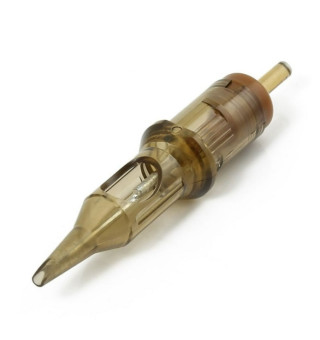
Before we start choosing, let's look at the different types of tattoo cartridges and how they differ in design. Modern tattoo machine cartridges are categorized by the placement of the needles within the cartridge, which determines the appropriate model for the task:
Round Liner (RL) - needles arranged in a round group, designed for precise contouring and fine lines;
Round Shader (RS) - a similar round arrangement, but with a wider spacing between the needles, used for shading and soft transitions;
Magnum (M1/RM) - needles arranged in two rows, ideal for shading large areas and creating smooth gradients;
Curved Magnum (CM) - a curved version of the Magnum, follows the natural curves of the skin and reduces trauma when shading;
Flat (F) - a flat arrangement of needles, used for precise geometric lines and texture work.
In addition to their design, tattoo cartridges vary by the number of needles, their thickness, and the presence of a membrane that prevents the backflow of blood and pigment into the machine.
Tattoo Cartridge Sizes
Tattoo cartridge sizes are indicated by markings that indicate the number of needles, their diameter, and their configuration. For example, 1207RL is deciphered as follows: the first two digits indicate the needle diameter in hundredths of a millimeter, the next two digits indicate the number of needles, and the letters indicate the configuration type. Understanding the markings allows you to navigate the product range without opening each package and select the right option based on the label.
How to Choose Tattoo Cartridges for Your Technique
When choosing tattoo cartridges, consider your technique: liners with a small number of needles are suitable for fine contour lines, magnums with the maximum number of needles are suitable for dense shading, and medium-sized shaders are suitable for watercolor effects. Many artists create their own top tattoo cartridges based on a specific manufacturer and consistency of needle thickness from batch to batch. It's wise to test several brands in small batches before determining the best tattoo cartridges for you.
Types of Tattoo Needles: A Complete Classification
The needles themselves deserve special attention, as there are many more types of tattoo needles than meets the eye. Tattoo needle classification is based on several criteria: grouping, diameter, and purpose. When understanding the different types of tattoo needles, it's important to remember the main types:
Liner - finely sharpened for precise contours and fine details, minimal line thickness;
Shader - the same needle group, but softer sharpened, for shading and smooth shadow transitions;
Magnum - essentially a needle for shading large areas, providing even pigment coverage;
Textured needle - for decorative effects and working with dense geometric elements.
Tattoo machine needles also vary within the same category: different manufacturers produce needles of the same diameter that produce different line thicknesses due to the quality of the steel and sharpening.
Tattoo Needle Sizes
Tattoo needle size is a parameter that should be considered separately from the overall cartridge markings. The smaller the needle diameter, the finer and more delicate the line, which is critical for contour work and fine details. Thicker needles are used for applications where filling speed is more important than pinpoint precision.
How to choose needles for a specific task
When choosing tattoo needles, it's important to consider not only the technique but also the area being worked on. When determining which needles are needed for a specific tattoo, follow this simple rule: the finer and more detailed the element, the fewer needles per cartridge. When choosing needles for an outline, liners with the smallest diameter are most often chosen, as they produce the clearest line. Therefore, the needles needed for a tattoo outline are determined not only by the thickness of the line from the sketch but also by the density of the skin in the area being worked on.
Cost and number of needles in a cartridge
Beginner artists often wonder how much a tattoo machine needle costs and whether it's worth skimping on this consumable. Price varies depending on the brand, the quality of the steel, and the presence of a backflow preventative. Saving money here is rarely justified: low-quality needles dull faster and cause more damage to the skin. A separate practical question is how many needles a tattoo machine can accommodate at any one time: typically, a single cartridge is used, and the number of needles inside depends on the selected configuration.
Best Needles and Care of Consumables
When compiling their list of the best tattoo needles, most artists focus on sharpening stability and the absence of burrs at the tip—this can be assessed under magnification. The most popular tattoo needles typically come from a few trusted brands, whose products undergo strict quality control at every stage. It's also helpful to understand how a tattoo needle works: it moves back and forth within the cartridge, piercing the skin and depositing pigment to a depth determined by the machine's settings. Regarding the question of how to clean tattoo needles, modern cartridges are disposable and sterile, so it's not the needle itself that needs cleaning, but the working surface and machine after each client.
Where to buy quality supplies
If you're wondering where to buy tattoo needles and cartridges from trusted brands, choose a supplier that guarantees sterile packaging and proper storage. High-quality supplies are the foundation of safe and predictable work, so saving on them almost always ends up costing you more in the long run.