Permanent Makeup: What It Is and Who It's Suitable For
Permanent makeup is a modern cosmetic procedure that helps enhance natural facial features and maintain a polished appearance for a long time. This form of long-lasting pigmentation has become popular due to its practicality and the time it saves on daily makeup. Understanding what permanent makeup is, who it's suitable for, and what results to expect is important for both beginners and those considering the procedure.
What is permanent makeup and what does it mean?
Permanent makeup involves injecting pigment into the upper layers of the skin using a very fine needle. The procedure is similar to superficial tattooing, but is gentler and less traumatic. The most popular areas for correction are eyebrows, lips, and the space between eyelashes.
When talking about permanent eyebrow makeup, people usually mean light, decorative correction that creates a neat shape and fills in gaps. Similar principles apply to lips: natural-looking permanent lip makeup allows you to emphasize the contours, add a subtle tint, and visually even out the shape.
Eyebrow permanent makeup: what it is and what techniques are available
Many clients ask: what is permanent eyebrow makeup and how is it different from traditional tinting?
Permanent eyebrow makeup is a long-lasting pigmentation that maintains the appearance of eyebrows for 1.5 to 3 years. It helps correct asymmetry, enhance expression, and create the desired shape.
Basic techniques:
Permanent powder eyebrow makeup – a soft dusting reminiscent of eyeshadow;
hair technique – imitating natural hairs;
mixed techniques – a combination of dusting and shading.
In professional circles, the phrase permanent eyebrow makeup is often used, emphasizing that the result looks natural and does not require daily touch-ups..
Permanent lip makeup: effects and features
Permanent lip makeup helps correct blurred contours, paleness, or uneven color. It's a favorite choice for those who want to emphasize the shape without making drastic changes.
It's also worth considering the nuances: there are queries like "the pros and cons of permanent lip makeup" or "what are the dangers of permanent lip makeup?" These questions are important because lips are a sensitive area. The procedure is safe when performed under sterile conditions and using high-quality equipment, but it may require a longer healing period.
Permanent eye makeup and eyeliner
The most popular area after the eyebrows and lips is the lash line.
Permanent eye makeup creates a delicate contour that makes the eyes more expressive. Those who dream of long-lasting eyeliner choose permanent winged makeup.
Perfect winged makeup is especially popular, where the artist draws a thin, symmetrical line that fits within the natural contour of the eye.
How long does permanent makeup last?
Before their appointment, many clients want to understand how long permanent eyebrow makeup lasts and whether there are differences between techniques.
On average, longevity depends on:
Skin type;
pigment quality;
care routine;
depth of application.
The procedure typically lasts for 1.5 to 3 years. For lips and eyes, the duration also varies, but is typically 1 to 2 years.
Who is permanent makeup suitable for?
The procedure is optimal for those who:
Wants to always look neat without daily makeup;
Has asymmetry, gaps, or scars in the eyebrows;
Suffer from allergies to decorative cosmetics;
Leads an active lifestyle (sports, travel, swimming);
Wants to visually correct facial features.
If you're researching permanent makeup, it's important to know that it's suitable for most people and can be tailored to individual needs.
How is permanent makeup done?
Technology is important for understanding how permanent makeup is performed in practice.
Procedure steps:
Consultation and shape selection;
preliminary sketch;
anesthesia;
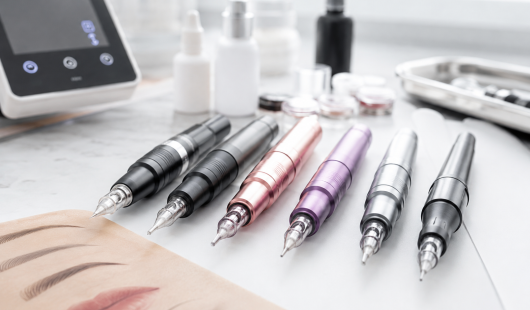
machine operation - pigment injection;
aftercare instructions.
A similar scheme is used for all areas - therefore, the answers to questions like "how to do permanent eyebrow makeup" or "how to do permanent makeup" will be the same in structure; only the application technique changes.
Pros and cons of permanent makeup
Any aesthetic procedure has its advantages and limitations.
The pros and cons of permanent makeup can be roughly divided as follows:
Pros:
Saves time;
no need to touch up your eyebrows or lips every day;
natural and long-lasting results;
a neat appearance in any weather.
Cons:
The need for healing;
Individual skin reaction;
The need for correction after 1–1.5 years;
The risk of getting an unsuccessful result if you choose the wrong specialist.
It's also important to know the dangers of permanent makeup—most risks are related to compromised sterility and improper aftercare, but with a qualified technician, such situations are eliminated.
How does permanent makeup come off?
Healing is accompanied by a gradual loss of color intensity. To understand how permanent makeup fades, it's important to consider your skin type and the depth of pigment insertion.
Initially, the shade may appear brighter, then soften. Within 3-6 weeks, it stabilizes and reaches its final color.
Price and reviews: what's important to know before the procedure
Before recording, the client usually studies:
How much does permanent eyebrow makeup cost?
Permanent eyebrow makeup reviews.
Before and after examples of permanent makeup.
The average cost depends on the artist's experience, the studio's level, and the pigments used.
Permanent makeup reviews confirm that with the right technique, the results look neat and natural.
Bottom Line: Who Is Permanent Makeup Really Suitable For?
In short, permanent makeup is a practical solution for those who want to save time, enhance their natural facial features, and be independent of makeup. It's suitable for most people and can be easily adapted to any individual needs.
Understanding what permanent eyebrow makeup is and how long it lasts helps you estimate how long it will last and whether you need corrections.
Properly performed permanent eyebrow makeup allows you to choose the most suitable style—from a soft powder finish to more graphic shapes.
Overall, the procedure remains safe, effective, and in demand—the key is to choose an experienced artist and follow the aftercare instructions.